
The energy responsible person is the person the owner of a designated (controlled) building must appoint to work at the building, under Thailand's Energy Conservation Promotion Act and the Ministerial Regulation Prescribing Qualifications, Duties and Number of Energy Responsible Persons B.E. 2552 (2009). In Thailand the role is widely known by its Thai abbreviation, PhChR (ผชร.). The law sets out when the person must be appointed, how many are needed, what qualifications they need and what their duties are. This article summarises these points from the official text, then explains what each duty means in day-to-day work in shopping malls and office buildings, and where data from electricity meters and occupancy counts makes the job easier.
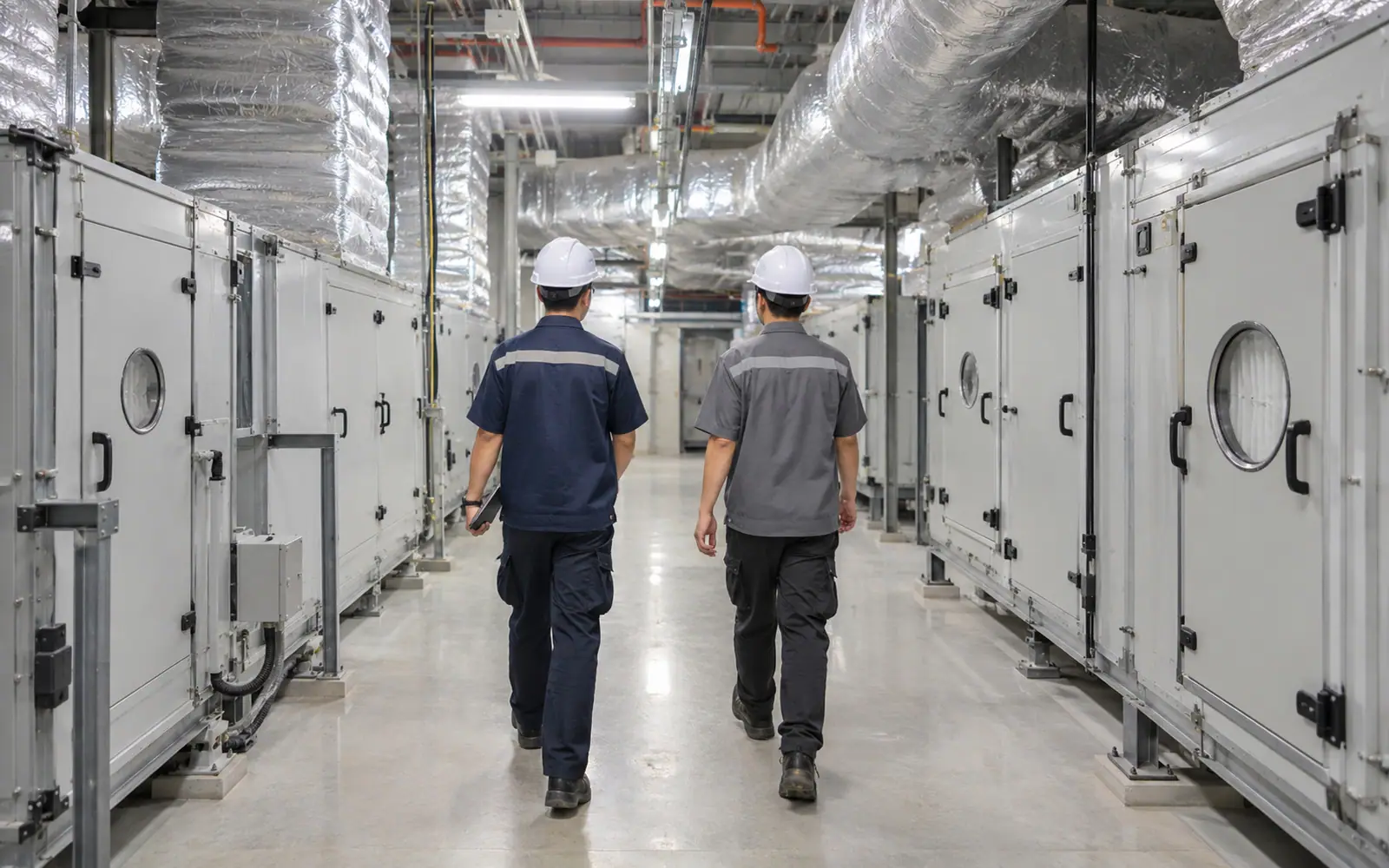
Who Is the Energy Responsible Person in a Designated Building?
The legal basis is Section 21 (2) of the Energy Conservation Promotion Act, as amended by the Act (No. 2) B.E. 2550 (2007), which empowers the Minister to issue a regulation requiring "the owner of a designated building to have an energy responsible person stationed at each designated building". The 2009 Ministerial Regulation sets out the details.
Three points stand out from the wording of the law:
- The duty to appoint belongs to the owner of the designated building, and Clause 1 of the regulation defines "owner of a designated building" to include any other person who occupies the designated building.
- The energy responsible person must be "stationed" at the building. Clause 4 of the regulation uses the phrase "stationed at the designated factory or designated building".
- The energy responsible person is not the auditor. The energy management auditor and certifier is a separate role, licensed by the Director-General of the Department of Alternative Energy Development and Efficiency (DEDE), and separate from the building's energy responsible person.
Who Does What: The Energy Responsible Person and Other Roles in Building Energy Management
| Role | What they do | Source |
|---|---|---|
| Owner of the designated building | Legally responsible for energy management, appoints the energy responsible person, signs the policy, submits the annual report | Act Section 21 · Energy Management Regulation B.E. 2552 (2009) |
| Energy responsible person (ผชร.) | Looks after equipment, improves how energy is used, helps the owner manage energy and comply with Director-General orders | Energy Responsible Person Regulation B.E. 2552, Clause 3 |
| Energy management working group | A team set up by the owner, with its structure and authority documented | Energy Management Regulation B.E. 2552, Clause 5 |
| Auditor and certifier | Audits and certifies the building's energy management before the report is submitted | Energy Management Regulation B.E. 2552, Clause 10 · Act Section 48/1 |
In practice, the energy responsible person is usually the link between all these roles: collecting data, coordinating with the working group and preparing documents for the auditor. The annual reporting process is covered in the article The Annual Energy Management Report for Designated Buildings
When Must the Appointment Be Made, and Who Must Be Notified?
Clause 4 of the 2009 Energy Responsible Person Regulation requires the owner of a designated building to have an energy responsible person stationed at the building within 180 days of the date it became a designated building, and to notify the Director-General immediately.
Clause 11 states that the method of notifying the appointment, with supporting documents, is as announced by the Director-General. The DEDE Notification on the Energy Responsible Person Appointment Form B.E. 2552 (2009) requires notification on Form BorPorChor 1 (บพช. 1).
In practice, DEDE's service manual states that the notification can be submitted in person, by post or through the department's online e-service, with no fee, and lists these supporting documents:
- Form บพช. 1, the notice of appointment of the energy responsible person
- Form บพช. 2, the certificate of energy conservation work (if applicable)
- Educational qualifications
- Training certificates in energy conservation, or for the senior energy responsible person course, depending on the qualification used
The same manual also refers to a DEDE notification on the appointment form dated B.E. 2564 (2021) and to a notification on electronic submission, so the form may have changed from the 2009 version. The building team should check the latest form with DEDE before every submission.
How Many Energy Responsible Persons Are Required?
The minimum number depends on the size of the building, under Clause 4 of the regulation.
| Size of designated building | Minimum number | Qualification condition |
|---|---|---|
| Approved by the energy supplier for electricity meters or transformers with a combined size below 3,000 kW or 3,530 kVA, or total energy use in the previous year below 60 million megajoules | At least 1 person | Any one qualification under Clause 2 |
| Approved for electricity meters or transformers with a combined size of 3,000 kW or 3,530 kVA or more, or total energy use in the previous year of 60 million megajoules or more | At least 2 people | At least 1 must qualify under Clause 2 (4) or (5); the rest may hold any qualification under Clause 2 |
Two points that often cause confusion:
- The headcount thresholds are not the designated-building thresholds. A building becomes a designated building from 1,000 kW, 1,175 kVA or 20 million megajoules a year, under the Royal Decree on Designated Buildings B.E. 2538 (1995). The figures of 3,000 kW, 3,530 kVA and 60 million megajoules decide whether a designated building needs 1 energy responsible person or 2 or more.
- The kW figure is the size approved by the energy supplier, not the building's actual peak demand.
Energy Responsible Person Qualifications
Clause 2 of the regulation sets out 5 qualifications. Any one is enough.
| Type | Qualification under Clause 2 | Can this person be the required 1 in a large building? |
|---|---|---|
| (1) | A higher vocational certificate, at least 3 years' work experience in a factory or building, and energy conservation work certified by the owner | No |
| (2) | A degree in engineering or science, and energy conservation work certified by the owner | No |
| (3) | Completion of energy conservation training, or similar training approved by the Director-General | No |
| (4) | Completion of the senior energy responsible person course, or similar training approved by the Director-General | Yes |
| (5) | Passing the energy responsible person examination run by the Department of Alternative Energy Development and Efficiency | Yes |
"Large building" in the last column means a building in the second row of the headcount table above. For qualifications (1) and (2), the final paragraph of Clause 2 requires the owner's certification of work to follow the form announced by the Director-General. In DEDE's manual, this document is Form บพช. 2.
Duties of the Energy Responsible Person in Law, and the Real Work in a Building
Clause 3 of the regulation sets out 4 duties. The text is short, but in a building that operates every day, each duty involves a lot of work.
| Duty under Clause 3 | Real work usually involved (practice) | Data that helps |
|---|---|---|
| (1) Maintain and periodically check the efficiency of energy-using machinery and equipment | Track the efficiency of chillers, air handling units, pumps and transformers, plan maintenance rounds | Electricity use per machine or system, efficiency trends, alerts on abnormal values |
| (2) Improve how energy is used in line with energy conservation principles | Adjust start and stop schedules, temperature set points, equipment sequencing and how space is used | Energy use per zone alongside occupancy per zone, results before and after changes |
| (3) Help the owner manage energy under the Energy Management Regulation | Collect data for potential assessment, draft targets and plans, track results, prepare documents for the auditor | Continuous energy data through the year, records of measures and evidence |
| (4) Help the owner comply with Director-General orders under Section 10 | Prepare data and carry out the orders the building receives | Auditable data, and a work system that shows the status of corrective tasks |
Columns 2 and 3 are practical guidance summarised by the author, not wording from the law.
Duty (1): Looking After Equipment with Numbers, Not Gut Feeling
"Periodically checking efficiency" becomes much easier with sub-meters per system. The energy responsible person can see whether a chiller is using more electricity per unit of cooling than last month, or whether a pump runs all night when it should stop. Without this data, efficiency checks often happen only while preparing the annual report, which is too late to fix anything.
Duty (2): Matching Energy Use to Real Use
Commercial buildings do not have a constant load. Visitor numbers in a mall on Saturday differ from Tuesday, and an office floor on Friday may have fewer people than on Wednesday. If the energy responsible person knows only kilowatt-hours, but not how many people used the space at that time, it is hard to say whether energy use was "too high" or "reasonable". Occupancy data helps answer that question. For a worked example of this approach in malls, see the article Mall Electricity Costs: Where Can You Cut When You Know Real Visitor Numbers?
Duty (3): Helping the Owner Manage Energy All Year
Energy management under the regulation requires a potential assessment, targets and a plan, carrying out the plan, checking results and a review at least once a year. These tasks reuse the same data many times. If data is collected continuously in one place, the energy responsible person does not have to gather it again each time. The full list of the owner's duties is in the article What Is a Designated Building, and What Must It Do?
Duty (4): Helping the Owner Comply with Director-General Orders
When the building receives an order under Section 10, as applied to designated buildings, the energy responsible person must help the owner carry it out. In practice, a building with historical energy data and auditable records of corrective work can answer questions and show progress faster than one that has to search for documents in several places.
Example: How Occupancy Data Helps the Energy Responsible Person Read the Electricity Bill (Hypothetical Figures)
A shopping mall finds that its electricity use in June was higher than in May. The energy responsible person needs to explain why at the review meeting.
| May | June | |
|---|---|---|
| Total electricity (kWh) | 1,000,000 | 1,050,000 |
| Total visitors (people) | 500,000 | 600,000 |
| kWh per visitor | 2.00 | 1.75 |
Looking at electricity alone, the building seems to be doing worse. Looking at it alongside visitor numbers, energy per visitor went down. The energy responsible person can explain that electricity rose with higher use, then look further at which periods energy did not fall with visitor numbers, such as after closing time. The figures in the table are hypothetical, to show how to read the data. A real analysis must also consider other factors, such as outdoor temperature, the number of operating days and the floor area in use.
When the Energy Responsible Person Resigns, Moves On or Leaves the Role
Clause 5 of the regulation states that if an energy responsible person leaves the role and the building no longer meets the numbers in Clause 4, the owner must:
- Notify the Director-General in writing that the person has left the role, immediately
- Appoint a replacement within 90 days of the date the previous person left, and notify the Director-General immediately
In practice, the harder problem is not finding someone new, but the building knowledge that leaves with the previous person: data files kept on a personal computer, schedules changed without records, and the reasons behind various settings. A building that keeps energy data, records of measures and the status of corrective tasks in a central system can hand over to a new energy responsible person much faster.
If the Regulation Is Not Followed
Section 55 of the Energy Conservation Promotion Act, as amended by the Act (No. 2), sets a penalty for the owner of a designated building or the energy responsible person who does not comply with a regulation issued under Section 21. The duties under the regulation are therefore a legal responsibility of the energy responsible person as well, not only of the owner. Other penalty provisions for designated buildings are summarised in the article What Is a Designated Building?
What Data Makes the Energy Responsible Person's Job Easier?
| Data | Which work it helps | Notes |
|---|---|---|
| Electricity from every main meter under the same house number | Overall energy picture, and checking against thresholds | Best collected daily or more often, not only monthly from bills |
| Electricity use by system | Checking equipment efficiency, assessing significant energy uses | Needs sub-meters or data from the building management system |
| Peak electricity demand | Seeing when load spikes, and the effect of changing equipment sequencing | Read alongside system start and stop times |
| Occupancy per zone over time | Explaining differences in energy use, finding energy used when no one is there | Design zones to match air conditioning control zones |
| Records of measures and corrective tasks | Tracking results against the plan, annual review, handover when people change | Record owner, date and before-and-after evidence |
How occupancy data connects with other building systems is covered in the article What Is a Smart Building?, and the difference between EMS and BMS in the article What Is an EMS in a Building?
How IMAS Supports the Energy Responsible Person
IMAS offers both building energy management and people counting, so the energy responsible person has complete data on both energy and building use.
- AI building energy management with Saturn Pyro on the IoTWatt 4.0 platform connects the meters, building management system and IoT devices a building already has, analyses down to equipment level such as chillers, pumps and air conditioning, alerts on abnormal use and peak demand, and turns findings into corrective tasks with named owners, stored evidence and tracking until closed.
- 3D people counting counts entries and exits by direction in real time and shows how many people are in each area, designed to count without identifying individuals, providing usage data to read alongside energy data.
The systems help the energy responsible person read data and track work. They do not take over the person's legal role, and they do not fill in DEDE forms for the building team. Decisions on adjusting systems, certifying data and legal responsibility stay with the owner, the energy responsible person and the auditor. See the overview for these buildings on the office and commercial building solutions page and the shopping mall solutions page.
Frequently asked questions
−Who is the energy responsible person (ผชร.)?
The person the owner of a designated building must have stationed at the building under the Ministerial Regulation Prescribing Qualifications, Duties and Number of Energy Responsible Persons B.E. 2552 (2009). Their duties are to look after energy-using equipment, improve how energy is used and help the owner manage energy as the law requires.
+How many energy responsible persons does a designated building need?
A building approved for electricity meters or transformers totalling below 3,000 kW or 3,530 kVA, or using below 60 million megajoules in the previous year, needs at least 1. A building at or above these thresholds needs at least 2, and at least 1 of them must have completed the senior energy responsible person course or passed the DEDE examination.
+What qualifications does an energy responsible person need?
There are 5 options, and any one is enough: a higher vocational certificate with 3 years' experience and certified work, an engineering or science degree with certified work, approved energy conservation training, the senior energy responsible person course, or passing the DEDE examination.
+Within how many days must the energy responsible person be appointed?
Within 180 days of the building becoming a designated building, with immediate notice to the Director-General. If an energy responsible person leaves and the building falls short of the required number, the owner must notify immediately and appoint a replacement within 90 days.
+Can the energy responsible person also be the auditor?
They are different roles. The energy responsible person is stationed at the building and helps the owner manage energy. The auditor and certifier is licensed by the Director-General to audit and certify the building's energy management. For conditions on one person holding both roles for the same building, ask DEDE directly.
+Can an energy management system or AI replace the energy responsible person?
No. The law requires the energy responsible person to be an individual with the qualifications set in the regulation. Systems give that person complete data, show anomalies early and track corrective work, but decisions and responsibility stay with people.
Want Your Energy Responsible Person to Have Data Ready All Year?
The IMAS team helps survey the meters and systems your building already has, plans how to connect energy and occupancy data, and starts with a pilot your energy responsible person can actually use. Details and costs are provided in the quotation.
Talk to the IMAS team · See AI building energy management
The legal information in this article was checked against the official text on 18 November 2026. Laws and forms may be amended later. Before making compliance decisions, check with the Department of Alternative Energy Development and Efficiency or the building's legal adviser.
References
- Energy Conservation Promotion Act B.E. 2535 (1992), Royal Gazette Vol. 109, Part 33 Kor, as amended by the Energy Conservation Promotion Act (No. 2) B.E. 2550 (2007), Royal Gazette Vol. 124, Part 87 Kor
- Ministerial Regulation Prescribing Qualifications, Duties and Number of Energy Responsible Persons B.E. 2552 (2009), Royal Gazette Vol. 126, Part 49 Kor, page 20, 31 July 2009
- Notification of the Department of Alternative Energy Development and Efficiency on the Energy Responsible Person Appointment Form B.E. 2552 (2009), Royal Gazette Vol. 126, Special Part 136 Ngor, page 60, 18 September 2009
- Ministerial Regulation Prescribing Standards, Criteria and Procedures for Energy Management in Designated Factories and Designated Buildings B.E. 2552 (2009), Royal Gazette Vol. 126, Part 47 Kor, 23 July 2009
- Royal Decree on Designated Buildings B.E. 2538 (1995), Royal Gazette Vol. 112, Part 33 Kor
- Department of Alternative Energy Development and Efficiency. Service manual: Notification of appointment of energy responsible persons for designated factories and designated buildings (published on DEDE's open data website)
- Saturn Pyro Sdn Bhd. IoTWatt 4.0 Digital Energy Audit as a Service. Website saturnpyro.com