IMAS Analytics.AI
HomeSolutionsPeople counting & visitor analyticsXPERIO dashboardVisitor forecastingAI building energy managementIndustriesShopping mallsRetail chainsAirports & transport hubsOffice & commercial buildingsTry itProjectsInsightsAbout usPartnersContact us

3D people counting: accurate visitor measurement without knowing who anyone is

The IMAS people-counting system uses ceiling-mounted 3D sensors to count, in real time, the people who pass through an entrance, a corridor or any zone you define. All data flows into the XPERIO dashboard, so your sales, marketing and building management teams see one shared set of numbers.

SENSEUNDERSTANDPREDICTACT

SENSE · UNDERSTAND

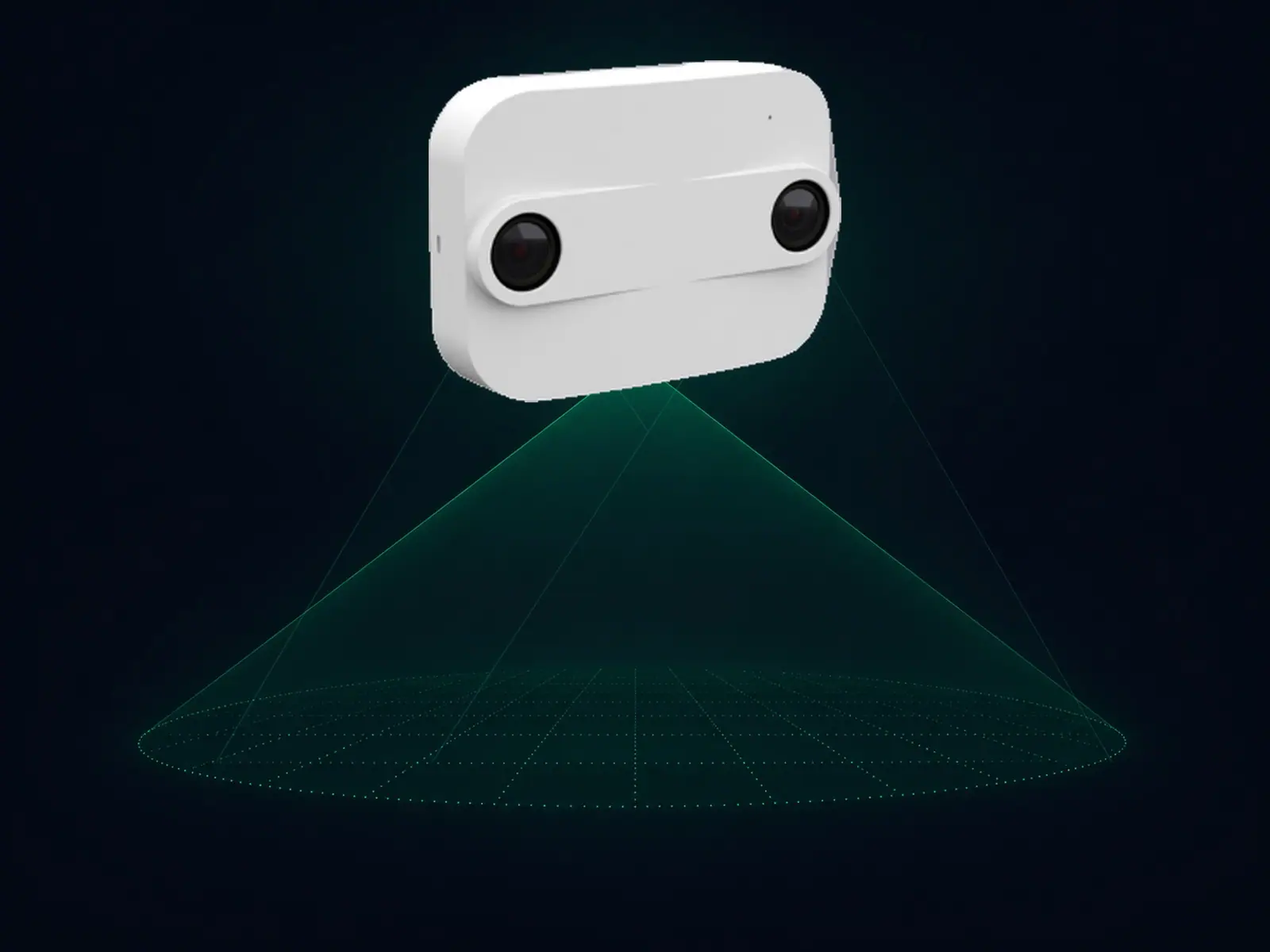
Dual-lens 3D people-counting sensor with its field of view
3D sensor (stereo vision)
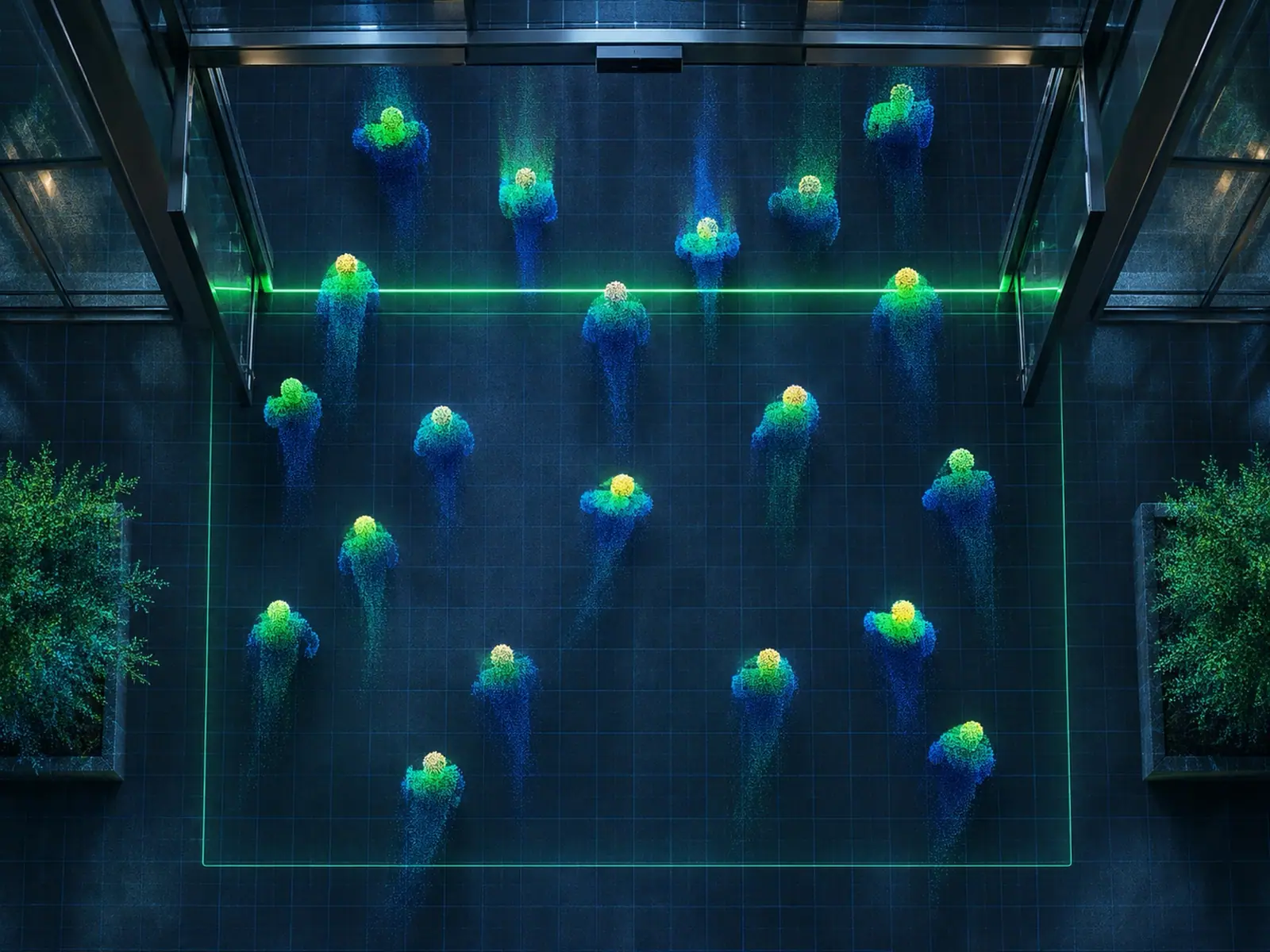
Top-down 3D depth view showing people as anonymous point clouds crossing a counting line
Entries and exits (footfall)

What is a 3D people-counting system?

A 3D sensor (3D stereo vision) has two lenses, like human eyes, so it can measure the height and distance of objects beneath it. The system can therefore tell people apart from shopping carts, shadows and objects, and track the direction of travel to know whether someone is entering or leaving. The sensor is mounted on the ceiling and looks down. Power and data run over a single network cable (Power over Ethernet, or PoE).

The data you get

  • People in and out (footfall) for each entrance, floor or branch, viewable from hourly up to yearly.
  • Number of people in the area right now (occupancy), used to see crowding and manage space.
  • How long visitors stay in an area (dwell time), showing which zones hold attention best.
  • Where crowds build up (high-traffic zones), used to plan store layouts, promotion spots and signage.
  • Passers-by versus people who walk in (capture rate), measuring how well the storefront draws people in.
  • Conversion rate, when store visitor counts are compared with the number of receipts from the point-of-sale system.
  • Queues and people flow, for airports and other areas with queues (a Xovis function).
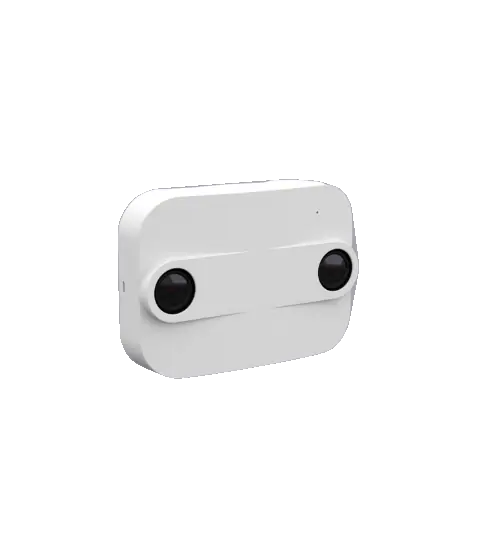
Ceiling-mounted dual-lens 3D people counting sensor

Why 3D sensors suit malls and airports

  • They separate people who walk close together or in groups better than counting from flat two-dimensional images.
  • Models are available for standard ceilings and for high halls such as airport terminals (the height range depends on the model; our engineers select it during the site survey).
  • Several sensors can be joined into one continuous coverage area (multisensor) to cover wide entrances.
  • Sensors can be configured and monitored remotely through a web browser.

Choosing the right sensor for your space

IMAS is not tied to a single sensor brand. We choose from our partners according to the size of the space, the ceiling height and what you need to measure.

Xovis (Switzerland) TD Intelligence
Strengths 3D sensors for large, crowded spaces and high halls, used in airports, retail and buildings 3D sensors using deep-learning AI (the TD2000 model), plus 2D sensors for stores
Best for Airports, transport hubs, shopping centers, wide entrances Multi-branch retail, shopping centers
Standards Per the manufacturer's documents: ePrivacy seal and four privacy modes Per the manufacturer's documents: FCC, CE and RoHS certified, built in ISO-standard factories

Model details, sensor counts and costs are set out in the quotation after the site survey. Read more about our partners

Xovis in Thailand

IMAS is a partner of Xovis AG in Thailand and, together with Xovis and TKC, installed the Xovis Passenger Tracking System at Suvarnabhumi, Don Mueang and Phuket airports. If you are looking for Xovis sensors for a mall, airport or building, the IMAS team in Bangkok can help with design, installation and support. See projects · Airports page

People counting and the PDPA

Legal teams at malls and public bodies often ask whether a people-counting system collects personal data. The answer depends on the model and its configuration. Based on the manufacturers' documents:

  • Xovis: The sensor has a built-in processing unit and outputs numerical data, such as movement coordinates. There is no biometric or personal data. It offers four privacy modes for use under European data protection law (GDPR) and holds the ePrivacy seal.
  • CountMatters (the XPERIO platform): Designed with privacy in mind from the start (privacy by design). It measures visits and behavior without needing any individual's identity for the analysis.

Our people-counting system therefore answers "how many people are there?", not "who is that person?" Compliance with Thailand's Personal Data Protection Act B.E. 2562 (2019) (PDPA) at each site still depends on its configuration and the organization's own policies. We can send the technical documents for the proposed model to your legal team for review.

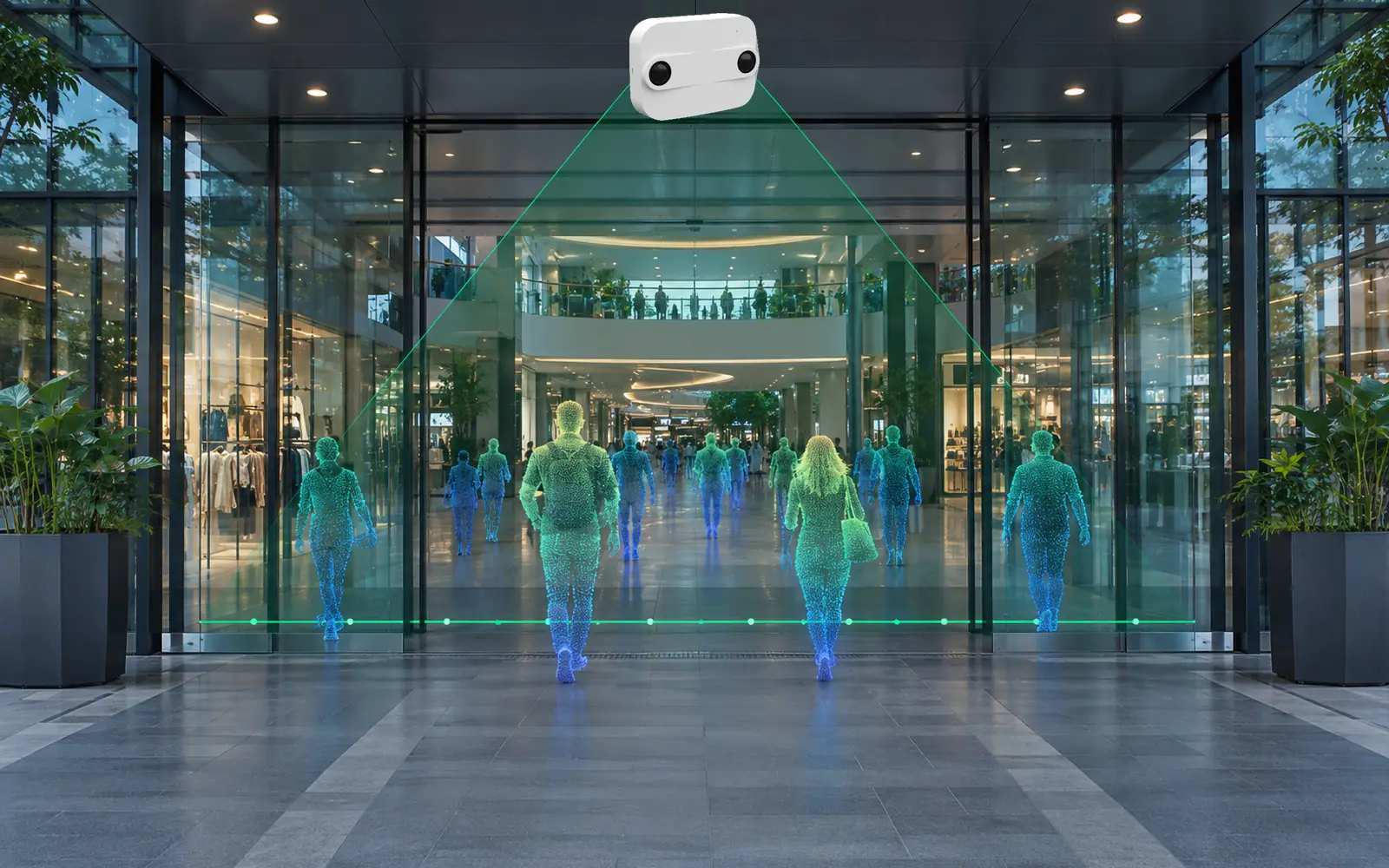
Mall entrance with a ceiling sensor, showing visitors as anonymous depth point clouds

How the data reaches your team

  1. The sensors count and send numerical data over the building network.
  2. The data enters the XPERIO dashboard, viewable on computers and tablets
  3. Organizations with their own reporting systems can pull the data through an API for further use.
  4. Build on it with visitor forecasting and use it to plan building energy
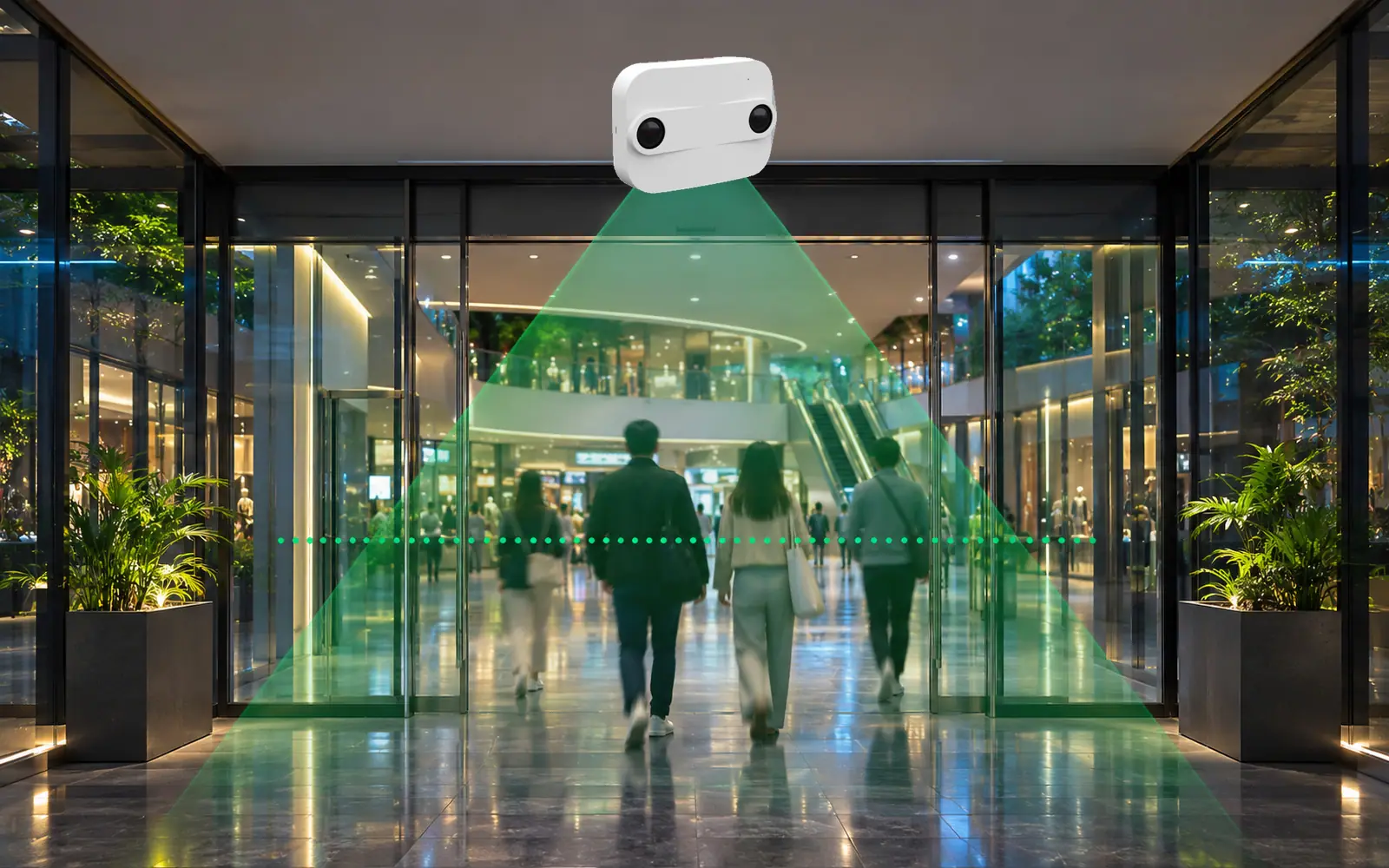
3D ceiling sensor above a mall entrance, with its field of view and a counting line across the doorway

Frequently asked questions

−How is a 3D people counter different from CCTV that counts people?

A 3D sensor is built specifically to count and measure movement. It measures height and distance, so it separates people walking close together, people from shopping carts, and shadows. Xovis models output numerical data, not video.

+Does the system store faces or personal data?

Xovis sensors process data on the device and output numerical data that contains no biometric or personal data, with privacy modes to choose from. For other models, we attach the manufacturer's documents to the quotation.

+How many sensors are needed?

It depends on the number and width of entrances and the ceiling height. Our engineers survey the site and state the number in the quotation.

+Can the data be used with in-store point-of-sale systems?

Yes. Comparing store visitor counts with the number of receipts gives the conversion rate for each branch and each time period.

+How accurate is the data?

Accuracy depends on the sensor model, the mounting position and the configuration. We recommend testing against a manual count after installation and re-checking periodically.

Wondering which sensors your space needs?