
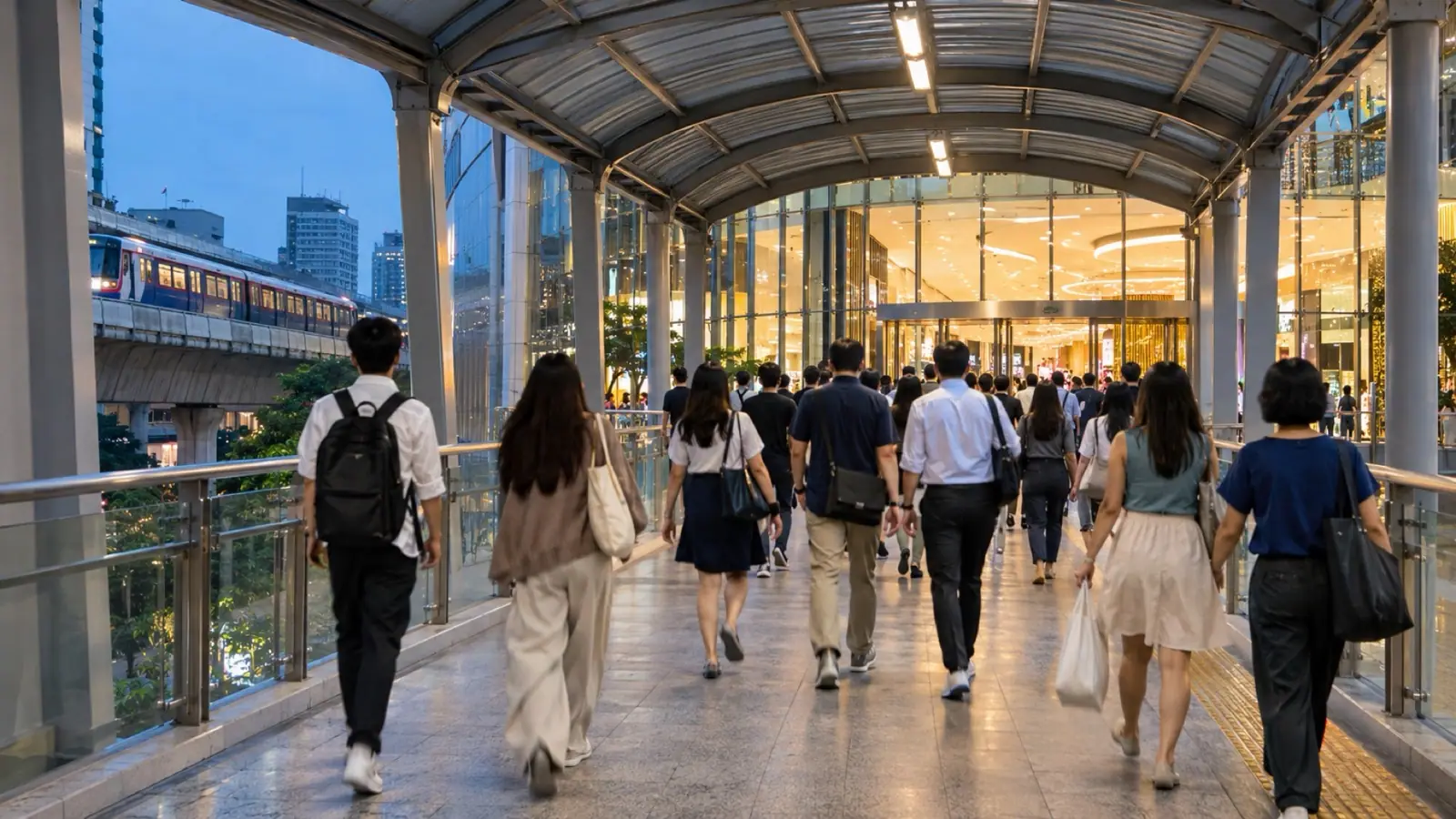
Footfall is the number of people who enter a space during a set period. For a shopping mall it is one of the most important figures there is, because every tenant chooses a location by asking the same question: "How many people walk past my storefront?" Retail space in Bangkok and the surrounding provinces is getting more competitive. Krungsri Research estimates that the occupancy rate of retail space fell from 94.6 percent in 2024 to 92.4 percent in 2025, and expects it to be around 89 percent in 2026. Accurate visitor data is therefore a tool malls use both to look after existing tenants and to attract new ones. This article explains what footfall means, where to measure it, and what you can do with it.
What Does Footfall Mean, and What Is Footfall Analysis?
Footfall literally means the sound of footsteps. In business it means the number of visitors, or the number of people entering a mall, a store or any other space. Footfall analysis is the practice of studying this figure together with other data, such as time spent in the space, walking routes and sales, to support decisions about space, marketing and service.
One distinction to make clear from the start is visits versus unique visitors. A people-counting system at an entrance counts visits. A person who steps out to the car park and comes back in is counted twice. This figure suits tracking density and comparing trends. Counting unique visitors needs other methods and calls for more care around personal data.
Which Visitor Numbers Should a Shopping Mall Measure?
| Metric | Where to measure | Question it answers |
|---|---|---|
| Visitors entering the mall | Every entrance, including train-station links and car-park access | How do today and this week compare with the same period last year? |
| Share of visitors by entrance | Each entrance separately | Where do customers come from, and where should signage, media and services be invested? |
| Visitors per floor and zone | Escalators, stairways and zone entrances | Are enough people going to the upper floors? Which zone is quiet? |
| Passers-by at storefronts (passer-by) | Main walkways in front of stores | What is each stretch of walkway worth as a location? |
| Number of people in an area (occupancy) | Zones and event spaces | When is it so crowded that services need to be added or safety managed? |
| Time spent in an area (dwell time) | A zone or the whole mall | How long do customers spend at the mall? |
To learn how to read dwell time and density maps, see the article What Is Dwell Time in Malls and Stores?
What Can a Shopping Mall Do With Visitor Numbers?
1. Value space and plan the store layout
Each stretch of walkway carries a different number of people. With passer-by counts for each stretch, a mall can see which locations have the most potential. The data supports decisions on tenant mix, on placing anchor tenants so that they spread visitors across the mall, and on pricing space so that it reflects the real value of each location.
2. Negotiate with tenants and attract major tenants with verifiable numbers
Major tenants, especially international brands, often ask for visitor data before they decide. Figures measured continuously and broken down by entrance and walkway are more credible than estimates. In a case study published in 2017 by a sensor manufacturer, a shopping mall in Bangkok used per-walkway visitor counts to assess the value of its rental space, and used visitor numbers as a key part of attracting a major tenant.
3. Support rent models based on visitor numbers
Some malls have begun to use visitor data as part of rent discussions (visitor-based rent). For example, visitor numbers can serve as evidence in a rent review, or discounts and terms can be designed around visitor numbers during quiet periods. This works when both sides trust the same numbers, so the counting system must be accurate, verifiable and measure the same way throughout.
4. Measure events and marketing
Malls invest in events and campaigns every month. Visitor numbers help answer which event really drew more people, compared with the same weekday in earlier weeks, and whether people who came for the event spread to other floors. That goes beyond judging success from photos of the crowd on the day.
5. Plan staffing for service, security and cleaning
Hourly and per-zone visitor data helps schedule security staff, cleaners and customer service points for the times when it is busiest. It can also trigger an alert when a zone holds more people than the level you set, on days with large events.
6. Support energy management
Air conditioning and lighting are among a mall's largest costs. Visitor data helps show whether energy use matches actual use of the space, for example before opening and after closing. Read more in the article What Is a Building EMS?
7. Price in-mall advertising media
Screens and advertising signs in a mall are worth as much as the number of people who see them. Passer-by counts at each location are data that media buyers use in their decisions.
Sharing Data With Tenants: A Benefit for Both Sides
A mall that passes visitor data on to its tenants lets them compare storefront passers-by with their own store entries and sales. Tenants can see whether their opportunity to grow sales lies in drawing people in from the location or in selling inside the store. That puts conversations between mall and tenant on the same set of data. To see how to calculate a store's conversion rate, read the article How Is Conversion Rate Calculated for Physical Stores?
Where Should You Install People-Counting Sensors in a Shopping Mall?
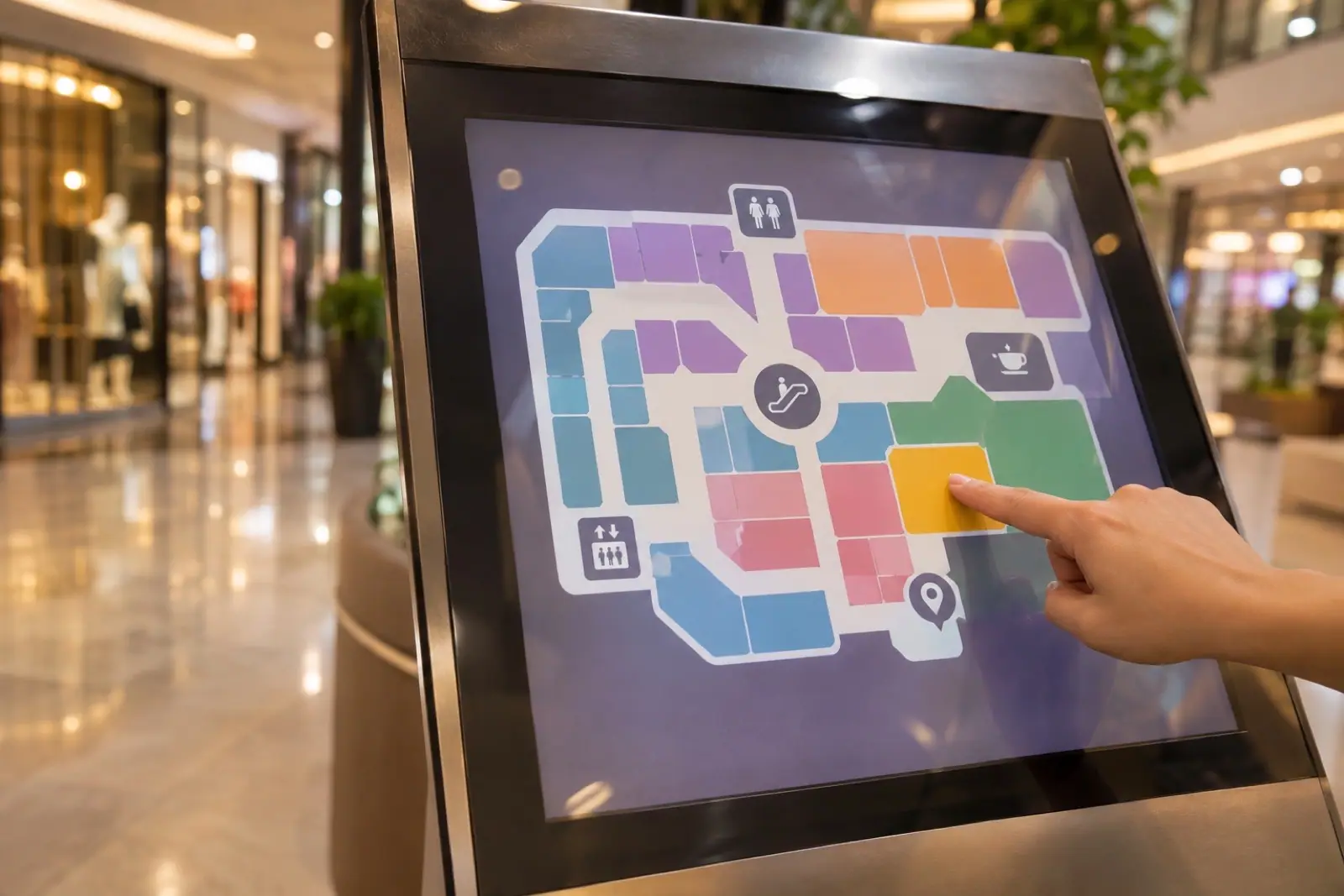
- Every entrance and exit of the mall, including train-station links, car-park access and rear doors. If any one is missing, the total will be lower than reality and will not be comparable over time.
- Escalators and stairways between floors, to see how far visitors spread to the upper floors.
- Main walkways that are key locations, to measure passers-by at storefronts.
- Entrances to specific zones, such as the food court, the supermarket zone and event spaces.
- Tenant storefronts, where the mall provides data to tenants.
Ceiling-mounted 3D sensors suit wide entrances and walkways where people move in many directions, because they count entries and exits separately by direction. For a technology comparison, see the article Buyer's Guide to People-Counting Systems
Pitfalls When Using Visitor Numbers
- Not counting every entrance makes the total lower than reality, and makes comparison across periods impossible if entrances change.
- Adding internal-point counts on top of entrance counts double counts, because one person passes several points in the mall. The mall-wide total should come from entrances only.
- Counting staff in the total. A mall has many tenant employees, so set clear time windows and a clear method for removing them.
- Comparing the wrong days. Compare the same weekday, or compare year over year while allowing for holidays and festivals that move.
- Changing the measurement method midway. If you change equipment or sensor positions, run the old and new side by side for a while to link the old numbers to the new.
IMAS People Counting and Visitor Analytics for Shopping Malls
IMAS looks after people-counting systems for a number of shopping malls in Thailand. See examples on our projects page.
- 3D people-counting system is mounted on the ceiling and counts entries and exits by direction in real time. It tracks time spent in an area and where people are densest, and is designed to count without identifying individuals.
- XPERIO dashboard brings data from every entrance, floor and zone onto one screen. It shows passers-by, the rate of drawing people into stores, dwell time, the number of people in an area, and conversion rate when connected to sales data, with comparisons from daily up to yearly. The platform is designed to help malls improve the efficiency of their space and their tenants' sales.
- Data consulting, for example using visitor data to support rent models, measuring marketing in the mall, and tenant conversion rates.
Numbers help the mall management team share one picture and talk with tenants more clearly. Decisions on store layout, tenants and events remain with the team that knows the mall best. For an overview, see the page solutions for shopping malls.
Frequently asked questions
−What does footfall mean?
It means the number of visitors, or the number of people entering a mall, a store or any other space during a set period.
+How is footfall analysis different from people counting?
People counting gives you a number of people. Footfall analysis takes that number and studies it together with dwell time, walking routes, sales and other factors, to support business decisions.
+What is the difference between visitor count and unique visitors?
Visitor count tallies every entry, so one person entering twice counts as two. Unique visitors count each person once. A people-counting system at the entrances gives the first kind of figure, which suits tracking trends and density.
+Should a shopping mall share visitor data with tenants?
Many malls choose to share it, because it helps tenants understand their own sales and puts talks about location and events on the same set of data. How much to share depends on each mall's policy.
+How many sensors are needed?
It depends on the number of entrances, the number of floors and the questions you need answered. The minimum is every entrance and exit, then add escalators, main walkways and key zones. The team surveys the site before proposing an installation design.
Want to know how many people are at each entrance and on each floor of your mall?
The IMAS team can survey the site, position the sensors and set up dashboards for management, leasing and marketing teams. Details and costs are given in the quotation.
References
- Krungsri Research (2026). Business/Industry Outlook 2026–2028: Retail space in Bangkok and the surrounding provinces. Bank of Ayudhya (Krungsri)
- Teledyne FLIR (2017). Case study of a people-counting system in a Bangkok shopping mall to attract a major tenant
- CountMatters AS. XPERIO analytics platform. countmatters.com website